Breaking Barriers to Learning for All
Education is a fundamental human right and a powerful tool for personal and national development. In Uganda, significant progress has been made toward expanding access to education. However, many learners with disabilities—particularly those with visual, hearing, physical, and learning impairments—still face barriers that limit their ability to participate fully in education. Accessible education is the key to ensuring that every learner, regardless of ability, has an equal opportunity to succeed.
What Is Accessible Education?
Accessible education is the practice of designing learning environments, teaching methods, and educational materials so that they can be used by all learners, including persons with disabilities. It goes beyond providing physical access to classrooms. It also includes making textbooks available in accessible formats, using assistive technologies, training teachers in inclusive teaching practices, and ensuring that digital learning platforms are accessible.
When education is accessible, learners can participate independently, confidently, and with dignity.
The Current Situation in Uganda
Uganda has made commendable efforts to promote inclusive education through national policies and commitments to international conventions. Despite these efforts, many learners with disabilities continue to encounter challenges such as:
- Limited availability of Braille textbooks and accessible learning materials.
- Inadequate assistive technology in schools.
- Shortages of teachers trained in inclusive education.
- Inaccessible digital learning platforms and educational websites.
- Negative attitudes and misconceptions about disability.
- Limited funding for inclusive education initiatives.
These barriers often result in lower school enrollment, higher dropout rates, and fewer opportunities for higher education and employment among persons with disabilities.
The Role of Assistive Technology
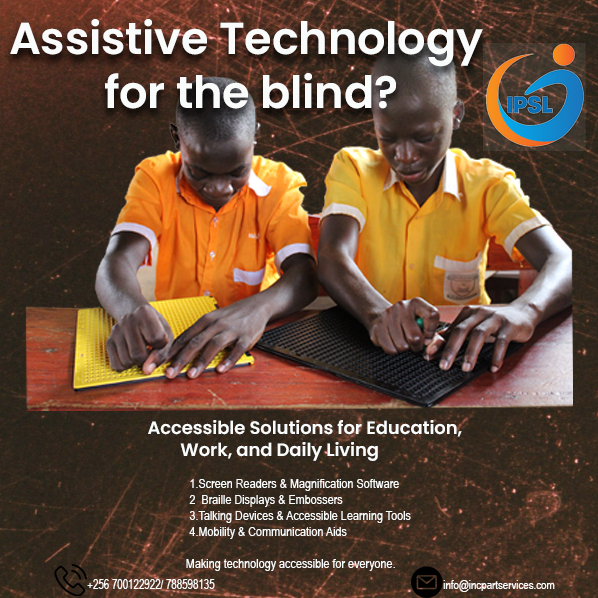
Assistive technology is transforming education by enabling learners with disabilities to access information, communicate effectively, and participate fully in classroom activities.
Examples of assistive technologies include:
- Screen readers such as JAWS and NVDA, which allow blind learners to use computers independently.
- Refreshable Braille displays that convert digital text into Braille.
- Electronic magnifiers and screen magnification software for learners with low vision.
- Braille embossers for producing accessible learning materials.
- Speech-to-text and text-to-speech tools that support diverse learning needs.
When schools invest in these technologies, they empower learners to study independently, complete assignments efficiently, and prepare for future employment.
Benefits of Accessible Education
Equal Opportunities
Accessible education ensures that every learner has an equal chance to acquire knowledge, develop skills, and achieve their goals regardless of disability.
Improved Academic Performance
Learners perform better when educational materials and teaching methods are adapted to meet their individual needs. Accessible resources reduce unnecessary barriers and allow students to focus on learning.
Greater Independence
Providing accessible technologies and learning materials enables learners to study, research, and complete assignments independently, building confidence and self-reliance.
Economic Development
Educated persons with disabilities are better equipped to secure employment, start businesses, and contribute meaningfully to Uganda’s economy. Inclusive education therefore benefits not only individuals but also the nation as a whole.
Stronger Inclusive Communities
When learners with and without disabilities study together in supportive environments, they develop mutual respect, understanding, and appreciation of diversity. This helps reduce stigma and promotes social inclusion.
How Schools Can Improve Accessibility
Schools and educational institutions can take practical steps to make learning more accessible by:
- Providing textbooks in Braille, large print, audio, and accessible digital formats.
- Investing in assistive technologies for learners with disabilities.
- Training teachers in inclusive education and accessible teaching methods.
- Ensuring classrooms, libraries, and computer laboratories are physically accessible.
- Developing websites and e-learning platforms that comply with accessibility standards.
- Working closely with parents, disability organizations, and accessibility experts to identify and address learners’ needs.
The Role of Government and Stakeholders
Creating an inclusive education system requires collaboration among government agencies, schools, development partners, civil society organizations, and the private sector. Continued investment in teacher training, accessible learning materials, assistive technology, and inclusive infrastructure is essential to ensure that no learner is left behind.
Organizations that specialize in accessibility and assistive technology also play a critical role by providing training, technical support, and innovative solutions that help schools become more inclusive.
Looking Ahead
As education increasingly moves into digital spaces, accessibility must remain a priority. Accessible e-learning platforms, inclusive digital content, and affordable assistive technologies can open doors for thousands of learners across Uganda, including those in remote communities.
By embracing accessible education, Uganda can unlock the potential of every learner and build a society where disability is never a barrier to learning, opportunity, or success.
Conclusion
Accessible education is not simply about meeting legal obligations—it is about creating a fair and inclusive society where everyone has the opportunity to learn and thrive. Every learner deserves access to quality education, regardless of ability. By investing in inclusive policies, accessible technologies, teacher training, and supportive learning environments, Uganda can ensure that education truly becomes a right enjoyed by all.
An inclusive education system is an investment in the country’s future. When every learner is empowered to reach their full potential, Uganda benefits from a more skilled, innovative, and inclusive society.